I knew law school was going to be expensive, but I didn’t anticipate the sheer number of fees for everything. Before starting, I had to pay a $500 non-refundable seat deposit to hold my place in the 1L class. Then, there was a $600 non-refundable fee for a mandatory week-long orientation. Tuition was $13,999 per semester with $623 in fees for residents and $18,466 per semester with $623 in fees for non-residents.
Why did this feel like forever ago? I had to go into the archives to see what I was feeling back then. I usually do a good job of journaling consistently but when I went to look back on my law school journey, I didn’t journal at all from September 2019 – June 2021. That gap speaks volumes about my state of mind during that period. Law school was all-consuming.
At orientation, we mingled with our peers, learned how to brief cases, and heard from guest speakers about navigating law school. The week concluded with a swearing-in ceremony, marking the start of our journey.
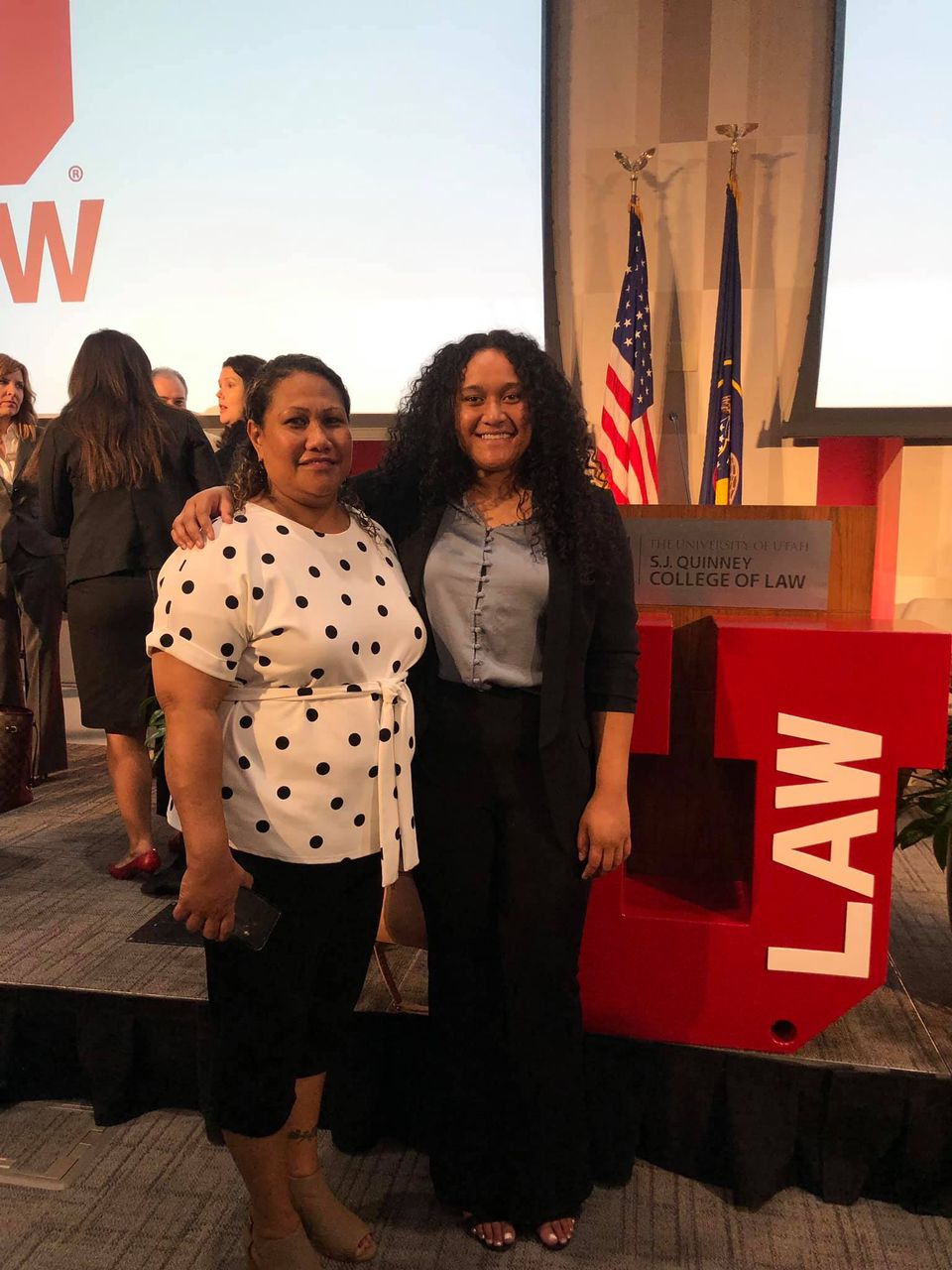


Starting, I was very excited. I couldn’t believe that I was a law student. Little old me from Samoa lol. I was excited but terrified. I meticulously pored over syllabi, mapped out assignments and exams on my Google Calendar, attempted to socialize, and devoured every tip and trick to survive the 1L year.
Yet, amidst all the anticipation, I felt so out of place. I was very quiet. Didn’t speak much. Hardly socialized. I was the only Polynesian in my class. One of the only brown people in our 1L class. Ethnically, racially, and culturally, I was so different from my peers. But also financially. It terrified me. I felt like I didn’t belong. The imposter syndrome was strong AF. I felt like because I came to law school as a sort of “well, why not?” moment… I was taking away the opportunity from someone more deserving, more knowledgeable, just more. So even though getting into law school was an achievement of its own, I didn’t feel proud. I didn’t want it known that I was pursuing this.
While my family wasn’t in dire financial straits, I grappled with guilt over not contributing more. Had I stuck with my job at DHL instead of pursuing law school, I could have offered greater support. The demands of law school also left me physically and emotionally absent from home, intensifying my guilt. I wasn’t as active in our sister group chat. I didn’t put in as much effort as I should’ve in my relationships with my parents and my sisters. This is why I recommend having candid conversations with your significant other, family, and friends about the challenges ahead if you decide to pursue law school.
The learning curve in my first year was steep. For the 1L year, everyone in the country generally takes the same set of classes – Introduction to Law, Civil Procedure, Contracts, Constitution Law I, Criminal Law, Torts, Legal Research, Legal Methods, and Property. The workload was intense – each of my classes had a heavy workload with extensive reading assignments and case briefings. Legal Research required a 25-30 page memorandum. The volume of material to cover is significantly more than in undergraduate studies and you’re expected to comprehend complex legal concepts and theories. Many professors use the Socratic method or “cold-calling”, where they will call on students to explore cases, legal principles, and reasoning. This could last the entire class period.
Law schools implement a strict grading curve, where only a certain percentage of students receive top grades. This system encourages a competitive environment. You are required to think analytically and critically in a way that may differ from your previous academic experiences. You must apply legal principles to real-world scenarios and develop persuasive arguments, regardless of your personal opinions. This requires a completely different way of thinking that you are expected to adapt to quickly, which can be disorienting.
My Torts professor called on me every single day of class. I kid you not. Every single day of class he called on me. He did not miss a single damn day. I wasn’t sure why he called on me but it became so apparent because my classmates would comment that our professor was always calling on me. I don’t know if it was because I was one of two brown students in the class. Maybe he saw something in me that needed cultivating? (LOL shuuua). Either way, it made my 1L year even more difficult. I dreaded going to class. There were some days that I was near tears after leaving that class.
Eventually, I just stopped caring so much about what my professors thought. (Is that healthy or not lollll). I knew the type of work that it took to be in the top 10% of my class and I wasn’t willing to put in that work. I just wanted to pass my classes, be a functioning human, and be somewhat present at home. Even with that mentality, my first year was a struggle.
Trying to balance the demands of law school with my personal life was a downhill battle lol. One thing you will hear a lot is that you need to keep your hobbies even though you’re in law school. You need to live a balanced life. Girl where? After my classes, I was beat. All I did was stay in my room. Escape in my fictional books. Stress about law school. Stress about life lol. I was mentally tired. All I wanted to do was sleep and escape reality. And the stress was compounded because of imposter syndrome. I didn’t feel like I belonged. I didn’t think I was as capable as my peers. I just felt inadequate.
I got B’s galore in my first semester of law school and a C+ in my Civil Procedure class. I just saw my grades, said ok, and moved on. I just sorted out in my head what I had to do moving forward. Then, COVID-19 hit right before my second semester, and we shifted to Credit/No Credit grading, which didn’t help my GPA. Adjusting to online law school was strange. I enjoyed not commuting but struggled with my attention span. Eventually, I moved from taking classes in bed to working at my desk, learning to be present in my classes while at home. It was a process, but I adapted. However, I already didn’t socialize with hardly anyone in my class. The switch to online classes didn’t help that at all and instead of attempting to find interaction elsewhere, I basked in the solitude.
1L Summer
When I entered law school, I had no clear direction on the type of law I wanted to practice or what areas might interest me. Given my Samoan background, immigration law seemed like a meaningful path to explore. So, for my 1L summer, I applied to Immigrant Legal Services (ILS) in Millcreek, UT, a non-profit organization dedicated to helping individuals and families navigate the complexities of the immigration system. To my delight, I was accepted, and I began working with ILS that summer. The work was incredibly detail-intensive, involving the review of text messages, photos, videos, and personal statements from individuals and families. I drafted applications and prepared statements, a meticulous and laborious process.
The most challenging aspect of the job was the content I had to review for asylum applications. To apply for asylum in the US, individuals must demonstrate that they have suffered persecution or fear future persecution due to their race, religion, nationality, membership in a particular social group, or political opinion. This meant sorting through graphic and heart-wrenching material to determine what was relevant for each case. The stories were often disturbing, shedding light on the harsh realities faced by those seeking asylum. Despite the emotional toll, the work was deeply meaningful. Each case represented a person or family hoping for a safer and better future. However, the pace of the bureaucracy was frustratingly slow, adding another layer of challenge to the work.
I worked with ILS from May to August and have kept in touch with my supervising attorney since then. She has been a valuable mentor, providing recommendation letters and making me feel comfortable to ask questions and seek guidance. This experience was pivotal in shaping my understanding of immigration law and reaffirmed the importance of legal advocacy in protecting human rights.
Reflecting on my 1L year, it’s clear that the challenges, costs, and personal growth were immense. Law school tested me in ways I never imagined, but here we are.
Till the next post.


 Dine's Ethos
Leave a reply to Evi Godinet Cancel reply